From Weed Wacker to Chainsaw Power: Engines and Drivetrains
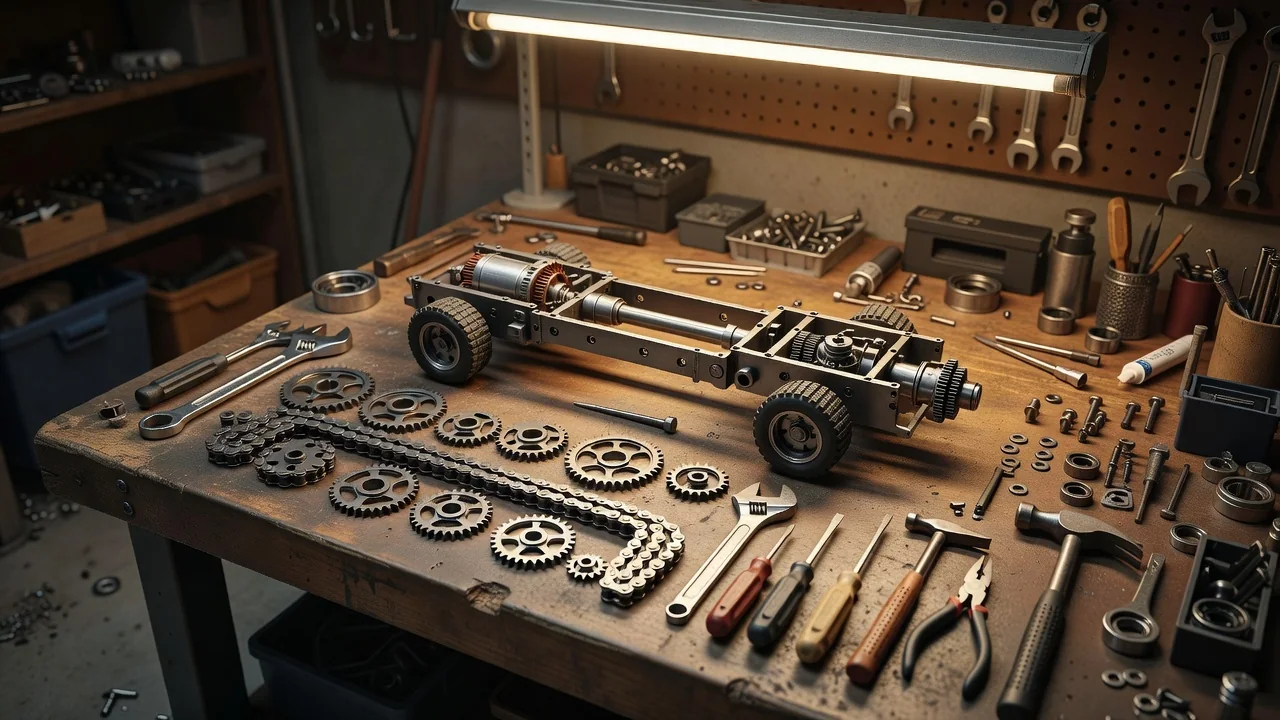
The WWPA's name preserves its origin story: the club began with weed wacker engines, outgrew them, and kept the name anyway. The move to chainsaw power defined the sport's engineering culture — small two-strokes, serious gearing and drivelines built far stronger than they look.
Why weed wacker engines fell short
A string trimmer engine is designed to spin a light line at high rpm, not to drag a weighted sled. The WWPA's founders discovered through experimentation that the typical weed wacker engine and transmission could not handle the pulling force their miniature trucks developed. Parts failed exactly where the torque peaked.
The fix was a wholesale upgrade: chainsaw engines of about 2.0 cubic inches, driving through gears and pulleys sized for the load. The swap delivered the pulling weights the builders were chasing and set the technical template for every class that followed.
Two-cycle vs four-cycle
The rulebook allowed two-cycle engines everywhere and four-cycles in the Tractor class. Two-strokes dominated because they make power simply and weigh little — critical when the whole vehicle is capped at 21 to 40 pounds. Four-cycles traded peak power for broader torque and easier fuel manners, suiting drivers who valued consistency over drama.
Gearing is the real engine work
Peak horsepower numbers mean little in pulling. What matters is wheel torque at crawling speed with full traction. Builders tuned sprocket ratios so the engine pulled from the heart of its powerband the entire length of the track, rather than screaming at the start and bogging at the finish.
Fuel, exhaust and tuning
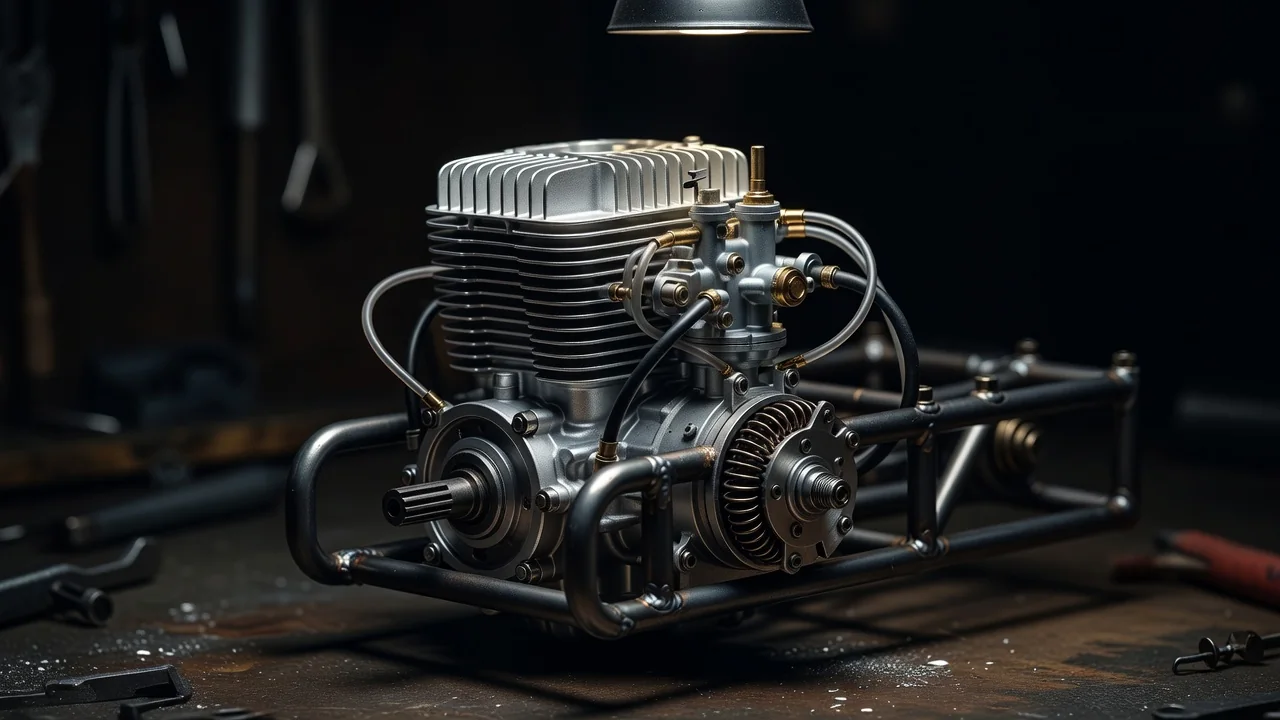
The rules were permissive — any fuel mixture, any exhaust in most classes — which opened the door to real tuning. Expansion-chamber exhausts, mixture adjustments and careful carburetor work separated the front-runners from the field, all within engines you could buy at a hardware store.
Clutch and chain drive
The clutch is the fuse and the weapon at once: it must engage hard enough to launch the sled but progressively enough to keep traction. Centrifugal clutches from the small-engine world were the standard, driving a chain to the rear axle. Chain alignment and tension were checked obsessively — a thrown chain ended a day and could end a season's points chase.
Engine rules by class
| Class | Engine rule | Typical setup |
|---|---|---|
| 2WD Stock Truck | 33 cc 2-cycle stock | Single garden engine, tuned pipe |
| Tractor | 33 cc 2- or 4-cycle stock | Stock engine, aggressive gearing |
| Modified Tractor | No motor limit | Big-bore singles or multi-cylinder builds |
| Exhibition | Open | Twin and triple engine show machines |
Lessons that still apply
- Build the driveline for the torque you will actually make, not the torque on the spec sheet;
- Gear for the track surface, and bring spare sprockets to every event;
- A reliable stock engine beats a fragile hot one over a full season;
- Keep spares of the parts that failed in 1999: clutches, chains and pulleys.