
Planning FPL Transfers Around Fixture Swings: A 6-Week Method
Fixture difficulty is the most predictable force in Fantasy Premier League. The schedule is published months ahead, kind runs and brutal runs arrive on rails — and yet the crowd reacts to every swing as if it were a surprise, buying after the first haul of a kind run and selling after the first blank of a tough one. A rolling six-week planning method flips that: you see every swing before it arrives and position your squad while the prices are still sleepy.
Why six weeks is the magic window
Shorter than four weeks and you are not planning, you are reacting. Longer than eight and the picture degrades — injuries, cup runs and form turn distant fixtures into guesses. Six weeks is the sweet spot: far enough to buy before the crowd, near enough that the fixtures still mean what they appear to mean.
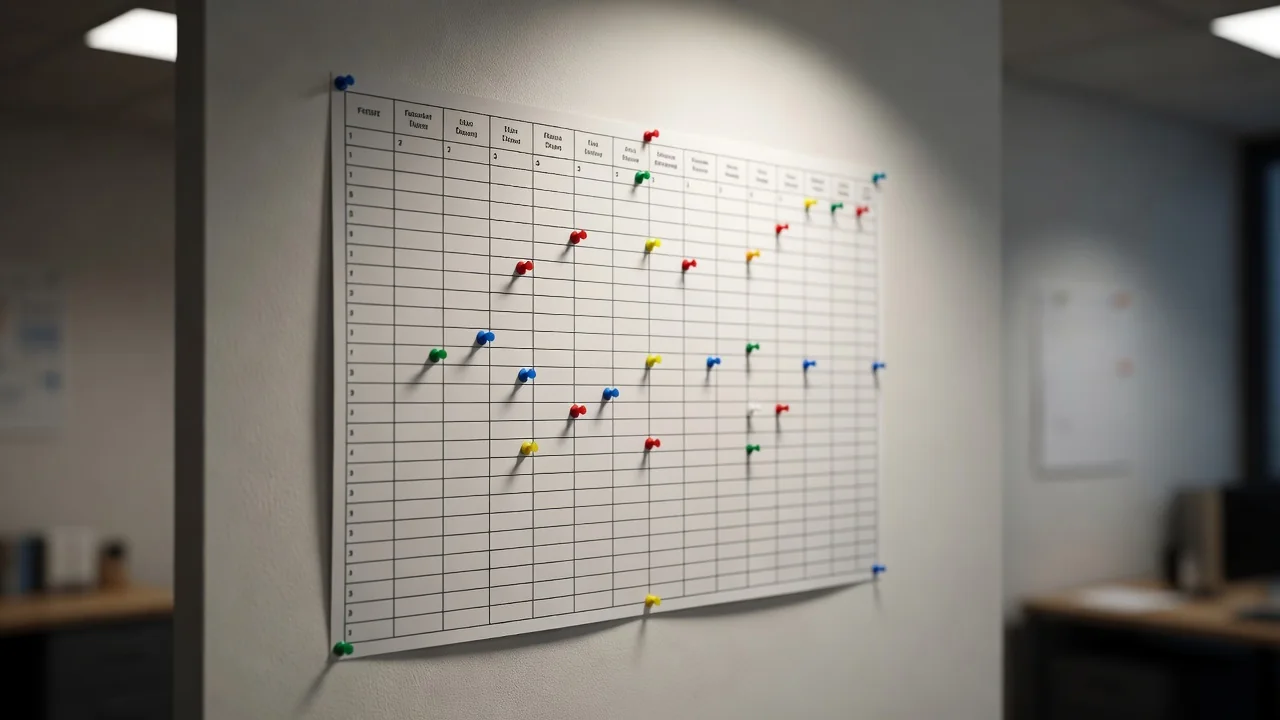
The method runs on a simple artefact: a fixture ticker for all twenty clubs, six columns deep, refreshed every week. Most FPL statistics sites publish one for free, colour-coded by difficulty. Your job is not to build it but to read it with intent — specifically, hunting the edges, the places where a club's colour flips from red to green or back.
- The green edge: a club entering a kind run — its talisman goes on your buy shortlist one week before the flip.
- The red edge: a club hitting a brutal stretch — its attacking assets go on your sell watch one week before it starts.
- The double edge: two clubs whose runs mirror each other — the natural rotation pairing.
Playing the green edge: buying the turn
The classic play is the talisman purchase one gameweek before a kind run begins. Not the man in form — the man about to be in form. Look for the club's designated points-collector: the penalty taker, the set-piece specialist, the striker everything flows through. Mid-table clubs are the richest hunting ground because their talismans are cheap and under-owned; a kind run lifts their output towards premium levels for a month.
Timing discipline is everything. Buying three weeks early means bleeding points through the tough fixtures that precede the run. Buying after the first haul means paying an inflated price alongside the entire bandwagon. One week early is the professional standard — close enough to limit the bleed, early enough to own him before the narrative starts.
Playing the red edge: selling the cliff
The mirror play is harder emotionally and worth more points. Your midfielder has been magnificent for six weeks — and his club's next five fixtures are away at the top sides. The crowd holds him on reputation through the first two blanks, then sells into the slide. You sell one week before the cliff, at full price, into the strength of his recent hauls.
The objection is always the same: "but he might score against anyone". Occasionally true, and irrelevant. You are not judging the player; you are judging the next five weeks of probability. Sell the cliff, bank the value, and you can always buy him back when his fixtures turn again — managers fall in love with players, professionals fall in love with windows.
| Ticker signal | Action | Timing | Typical gain |
|---|---|---|---|
| Green edge in 2 weeks | Shortlist the talisman | Watch and verify role | Setup |
| Green edge next week | Buy the talisman | One gameweek early | 10–25 pts over run |
| Red edge next week | Sell the asset | Before the first blank | Price + sanity |
| Mirrored runs | Build rotation pair | Any calm week | Budget saved |
The weekly twenty-minute ritual
The method only works as a habit, so fix it in the calendar. Every week, after the deadline passes: refresh the six-week ticker, mark the new edges that appeared, update the buy shortlist and sell watch, and cross-check both against your squad. Most weeks produce no action — the edge is in seeing the turns early, not in constant trading. But two or three well-timed swing moves per half-season, executed a week before the crowd each time, are worth 40 to 60 points a year. That is the margin between a good rank and a great one, bought with twenty quiet minutes a week.

International breaks are the natural checkpoints for this method. The club calendar pauses, no gameweek pressure exists, and the six-week ticker can be rebuilt from scratch with fresh injury and form information folded in. Managers who treat each break as a planning fortnight — mapping the next swing, queuing the transfers, setting the buy and sell watches — consistently arrive at fixture turns a week earlier than the managers improvising between deadlines.
Key takeaways
- Fixture swings are published months ahead — the crowd just refuses to look.
- Plan on a rolling six-week ticker; shorter is reacting, longer is guessing.
- Buy talismans one week before kind runs; sell assets one week before cliffs.
- Fall in love with windows, not players — you can always buy him back.
- Twenty minutes a week on the ticker is worth 40–60 points a season.
Keep reading

FPL Transfer Timing: When to Sell, When to Hold, When to Roll
The best FPL managers are not smarter pickers — they are better timers. A decision framework for every transfer situation.
2026-08-27
How to Stop Knee-Jerk Transfers From Ruining Your FPL Season
One blank, one panic, one minus four. Knee-jerk transfers are the silent rank killer — here is the discipline system that stops them.
2026-08-20
FPL Price Changes Explained: Rises, Falls and What They Cost You
Price changes feel urgent and cost almost nothing — until they cost a lot. The real maths of rises, falls and sell prices.
2026-08-13